Clara Gonzalez Sueyro
Product & Audience Strategy
National Geographic — Identifying Unmet Audience Needs May–June 2017
Your Shot photography community
Using Jobs-to-Be-Done to inform product strategy

Decision at Stake
The team needed to decide whether to keep optimizing existing features — or step back and redesign the platform around unmet audience needs that shape how photographers grow and engage over time.
The team had analytics and prior research, but lacked shared clarity around what members were truly trying to accomplish — and where the platform was failing to support progress.
Context
Your Shot is National Geographic’s global photography community, combining editorial curation with user-generated content. Leadership needed clarity on how photographers experienced the platform — and where investment would create the most value.
My Role
I led a Jobs-to-Be-Done research program to help product, design, and editorial teams move beyond feature-level decisions and align around real audience progress.
The goal was not research output, but decision clarity — where to invest, what to deprioritize, and how to differentiate.
Research Approach (in Service of Decisions)
The research connected qualitative insight with quantitative validation to identify which audience needs were both important and underserved.
Methods & Research Rigor (Jobs-to-Be-Done)
To ensure that insights were both credible and decision-ready, we used a Jobs-to-Be-Done research approach grounded in behavioral evidence rather than self-reported preferences. The methods below were designed to surface real constraints, success criteria, and unmet needs at scale.
Behavioral segmentation
To ensure broad coverage of member experiences, we recruited participants across key behavioral dimensions:
Frequency of use
- Disengaged (low frequency of use)
- Engaged (high frequency of use)
Contribution level
- Power contributors (upload many photos, often)
- Infrequent contributors (upload many photos at low frequency)
- Supporters (upload few photos, but engage through favorites and feedback)
Duration of membership
- Veterans (membership > 3 years, frequent users)
- New members (joined within the last 3 months)
- Deactivated members (inactive within the last 3 months)
In-depth interviews
We conducted 16 in-depth interviews spanning the full behavior spectrum. Each interview focused on the job the participant ranked as most important, capturing the steps they take to make progress and the constraints they encounter.
This lens helped us understand not just how members use Your Shot, but what they are ultimately trying to achieve as photographers — and where the platform supports or hinders that progress.

Interview analysis
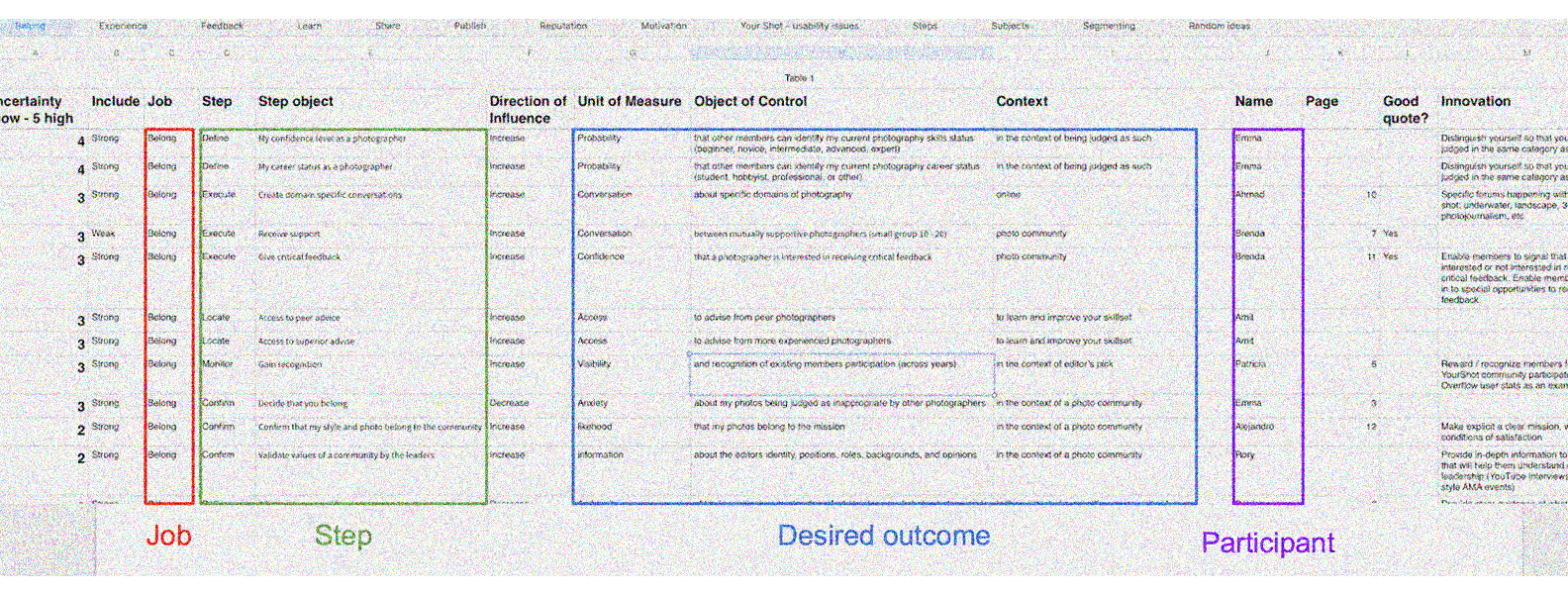
Interviews were coded and analyzed to define the steps of each job and capture desired outcomes — measurable success criteria customers use to judge whether they are making progress.
Job maps
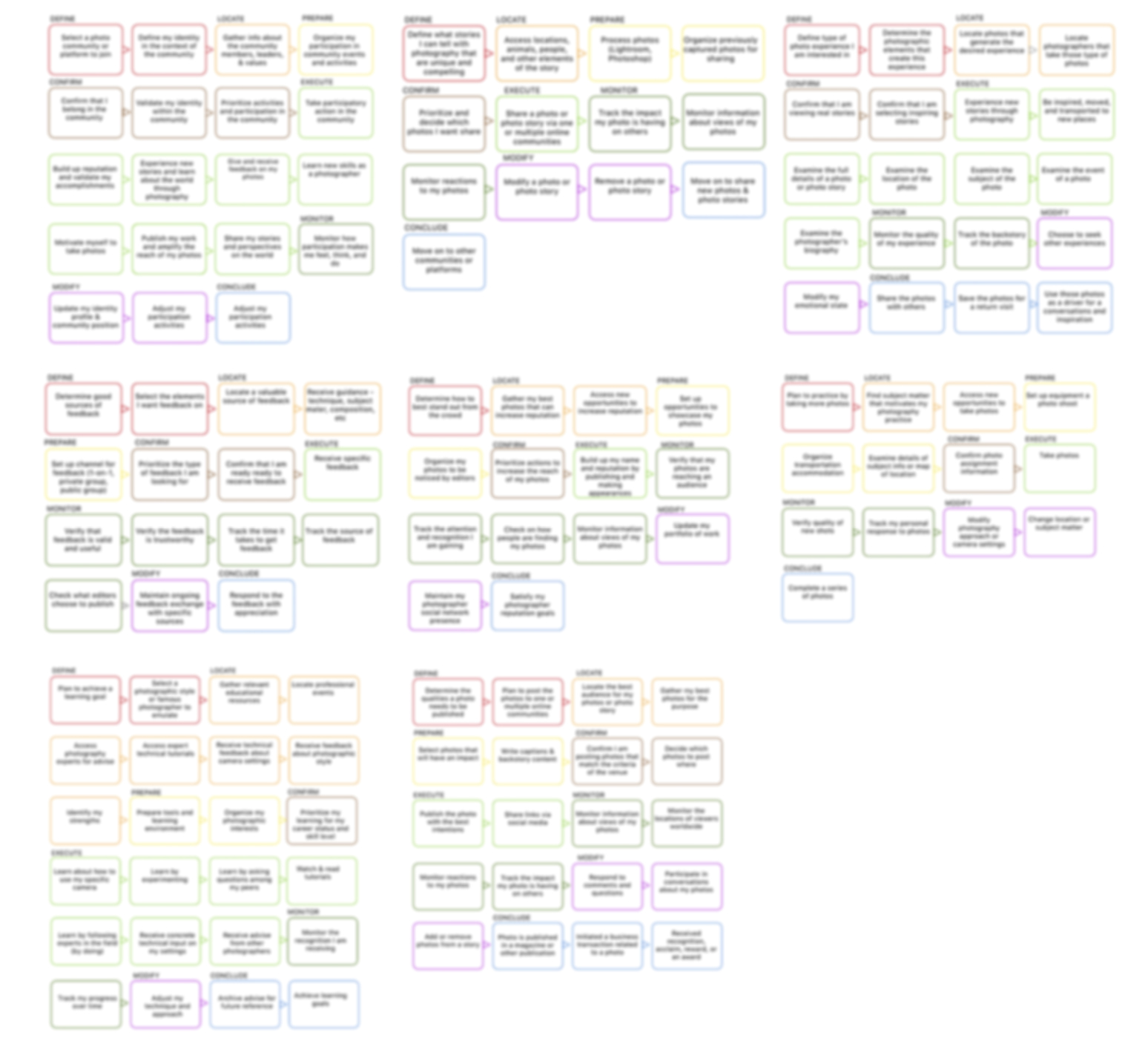
We created a job map for each job to represent the ideal process people follow to make progress — independent of any specific product or tool.
Job maps make it possible to see where friction occurs across the journey and identify where product improvements can have the greatest impact.
Desired outcomes
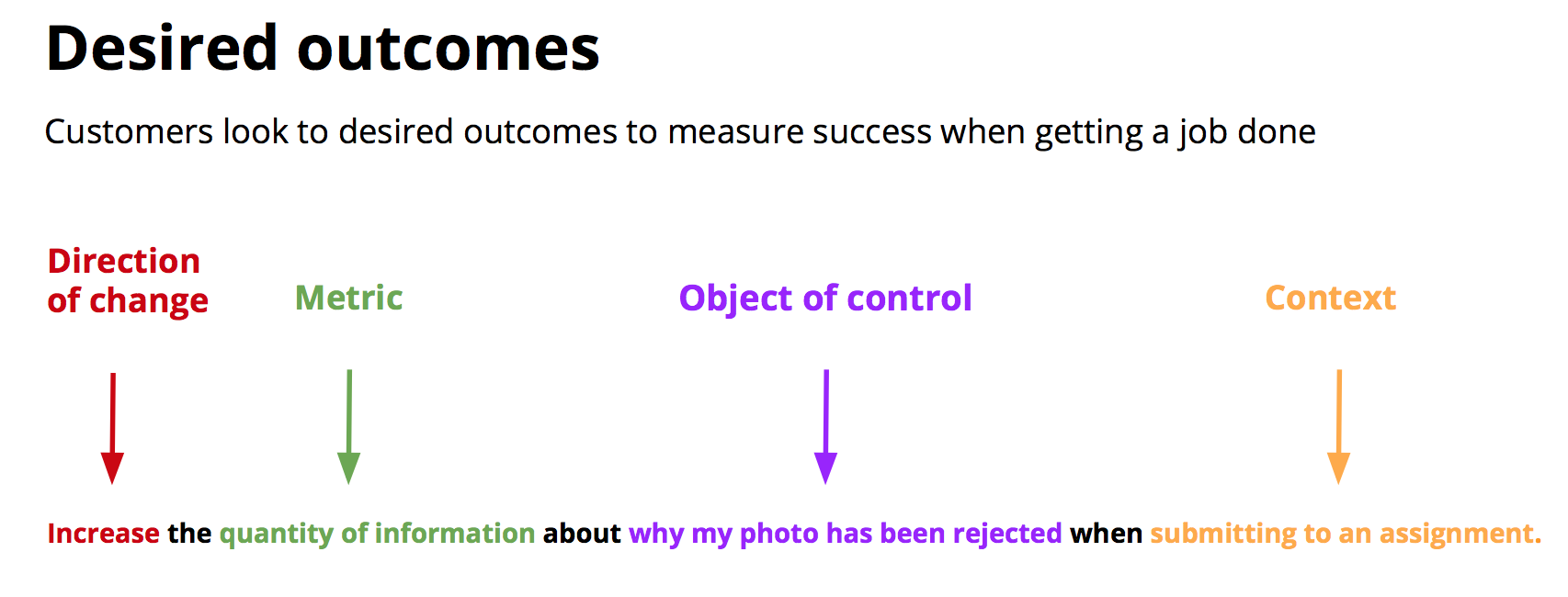
When people execute a job, they carry a set of internal “success metrics” — what Outcome-Driven Innovation calls desired outcomes. These outcomes help teams design for faster, more reliable, and more satisfying progress.
We initially captured 256 desired outcomes across the jobs, then consolidated overlapping statements to arrive at 58 clear, decision-ready outcomes.
Survey design
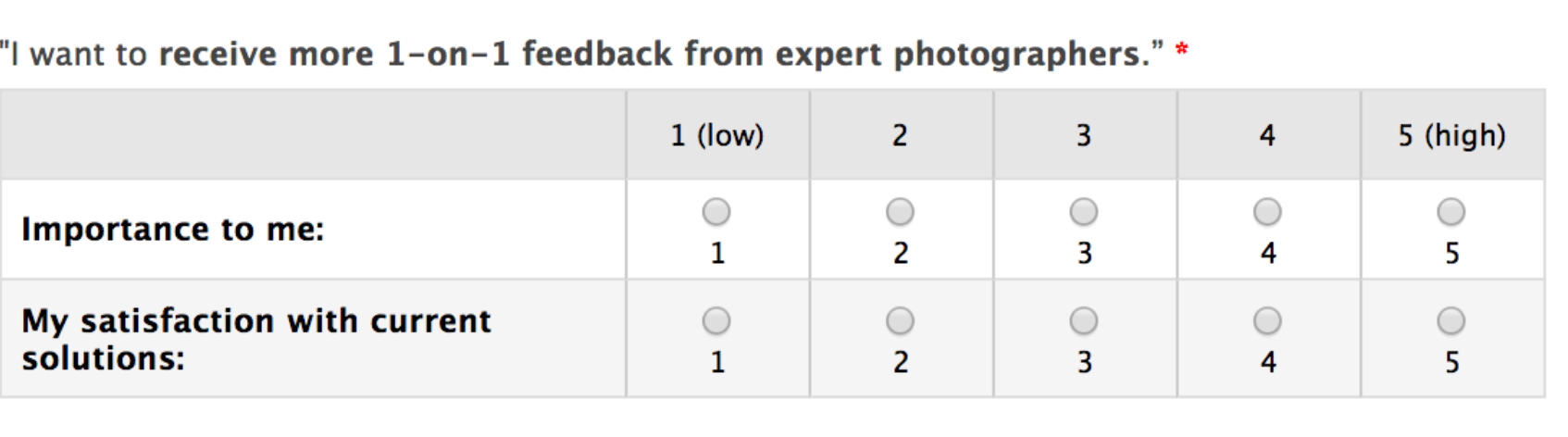
Desired outcomes were rewritten into survey-ready statements and administered to both Your Shot members and professional photographers outside the community.
We collected 100 responses and offered a $50 Amazon gift card incentive.
Opportunity mapping
The opportunity map plots desired outcomes across three categories: underserved, appropriately served, and overserved.
This view allows teams to prioritize growth opportunities — focusing on needs that matter to customers but are poorly satisfied by existing solutions.
Impact
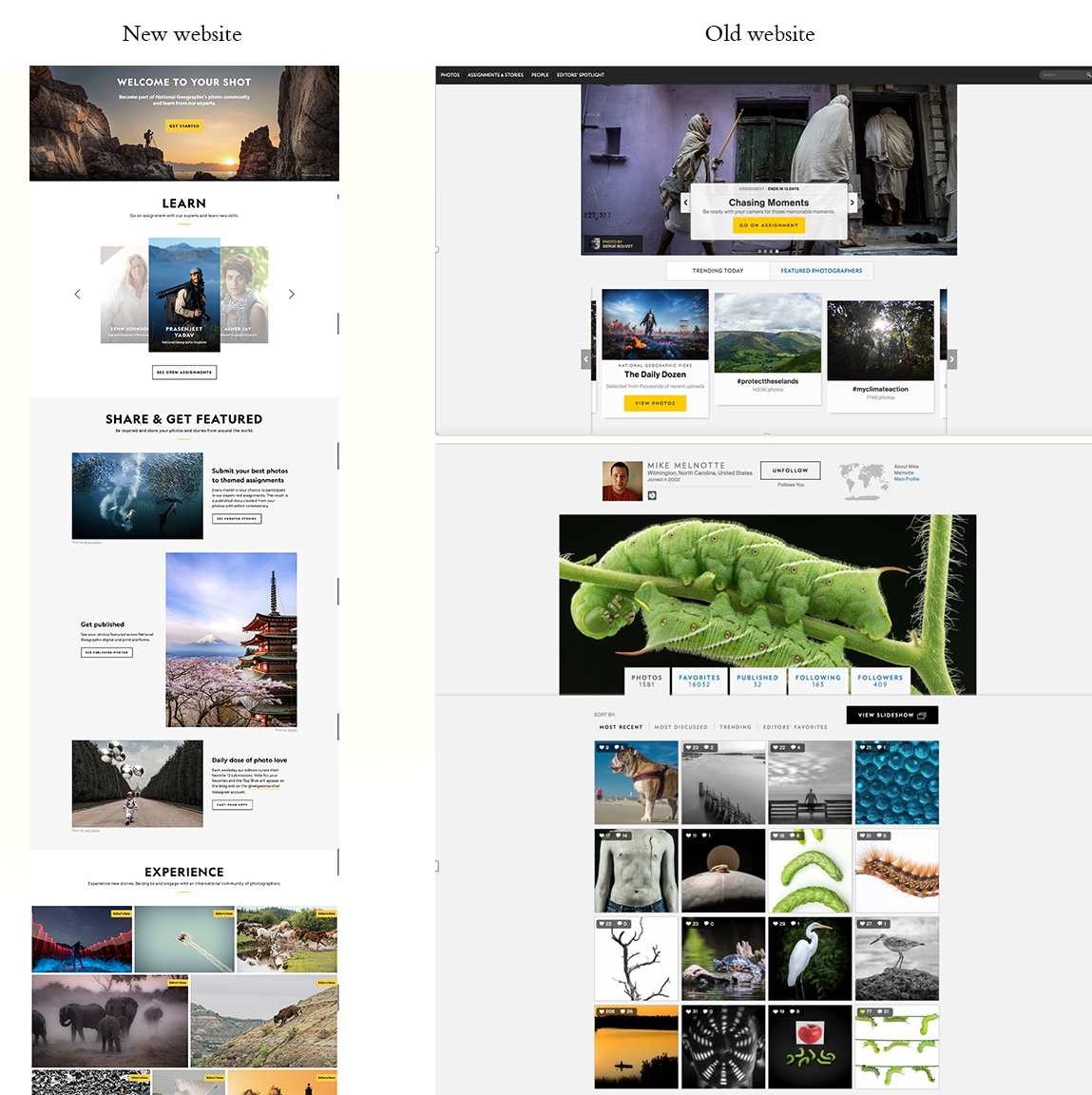
National Geographic used the findings to guide product management and design decisions during the Your Shot redesign, shifting focus from incremental features to underserved audience needs.
The work gave leadership a shared language for prioritization and became the foundation for additional research programs.