
CalCareers — Improving Job Discovery & Access 2023
Search research & experience strategy
Improving the user experience and performance of the CalCareers job search
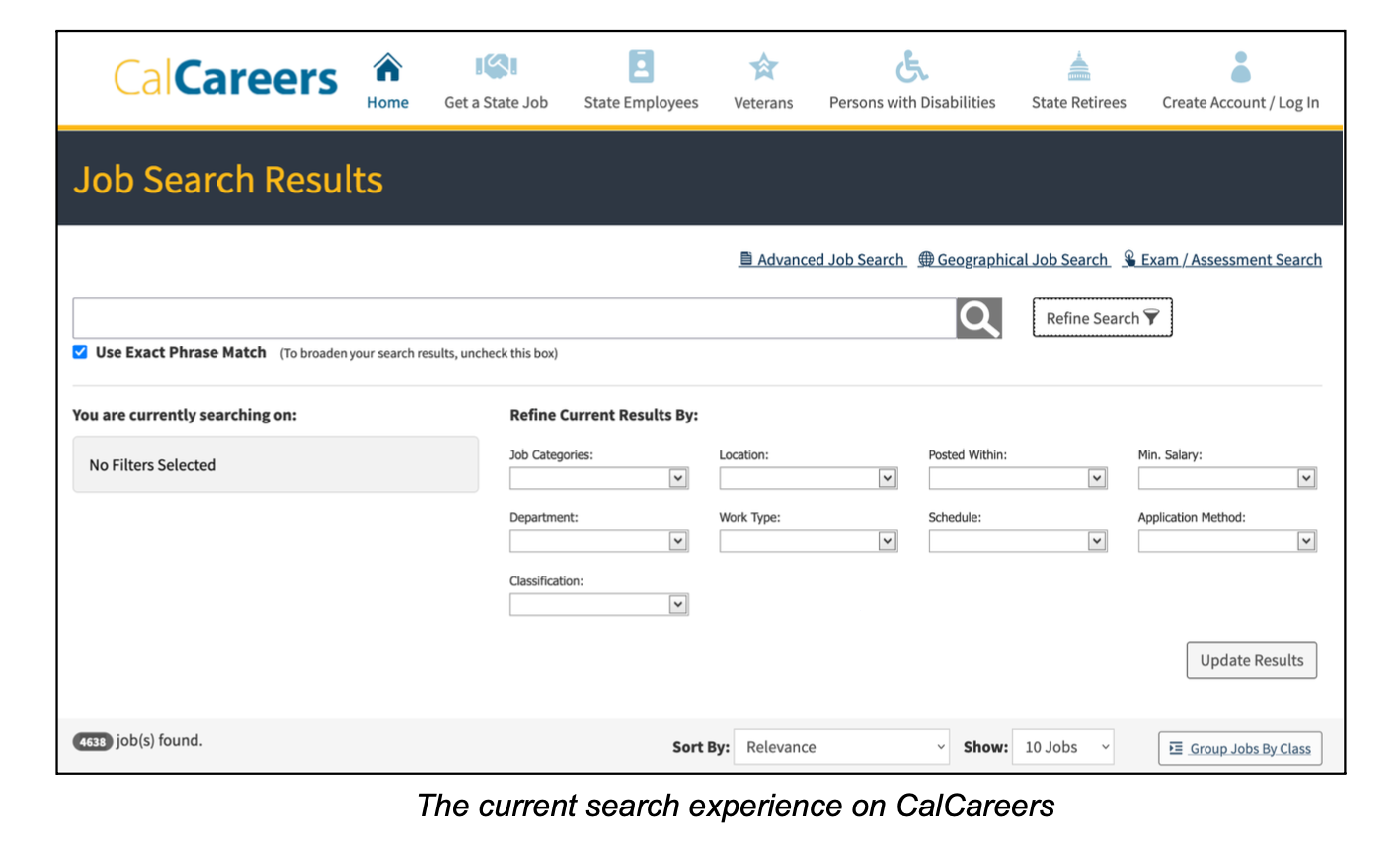
Decision at Stake
CalCareers — California's official state jobs portal — serves as the primary gateway for candidates seeking public sector employment. However, the job search and filtering experience was creating unnecessary friction.
The question was: Where should improvements be prioritized to meaningfully reduce candidate frustration while respecting the technical and policy constraints of a large-scale government system?
Context
Building on earlier hiring research, this project focused specifically on the job discovery experience — understanding how candidates navigate search, filter, and exploration on CalCareers.
The goal was to identify high-impact improvements that would reduce candidate drop-off without requiring a complete system overhaul.
My Role
I led search research and experience strategy, working closely with designers, engineers, and CalHR stakeholders to translate research findings into actionable design recommendations.
My role included usability testing, search behavior analysis, and helping the team prioritize changes based on both user impact and technical feasibility.
Research Approach (in Service of Decisions)
We focused on understanding how candidates actually search for jobs — what they expect, where they get stuck, and which improvements would meaningfully reduce friction.
Research combined usability testing with behavioral analysis to identify not just what was broken, but what mattered most to candidates trying to find relevant opportunities.
Methods & Research Rigor
- Usability testing with job seekers navigating CalCareers
- Search behavior analysis and filter usage patterns
- Stakeholder interviews with HR staff and recruiters
- Comparative analysis of similar job search platforms
- Design iteration and validation testing
Key Insights
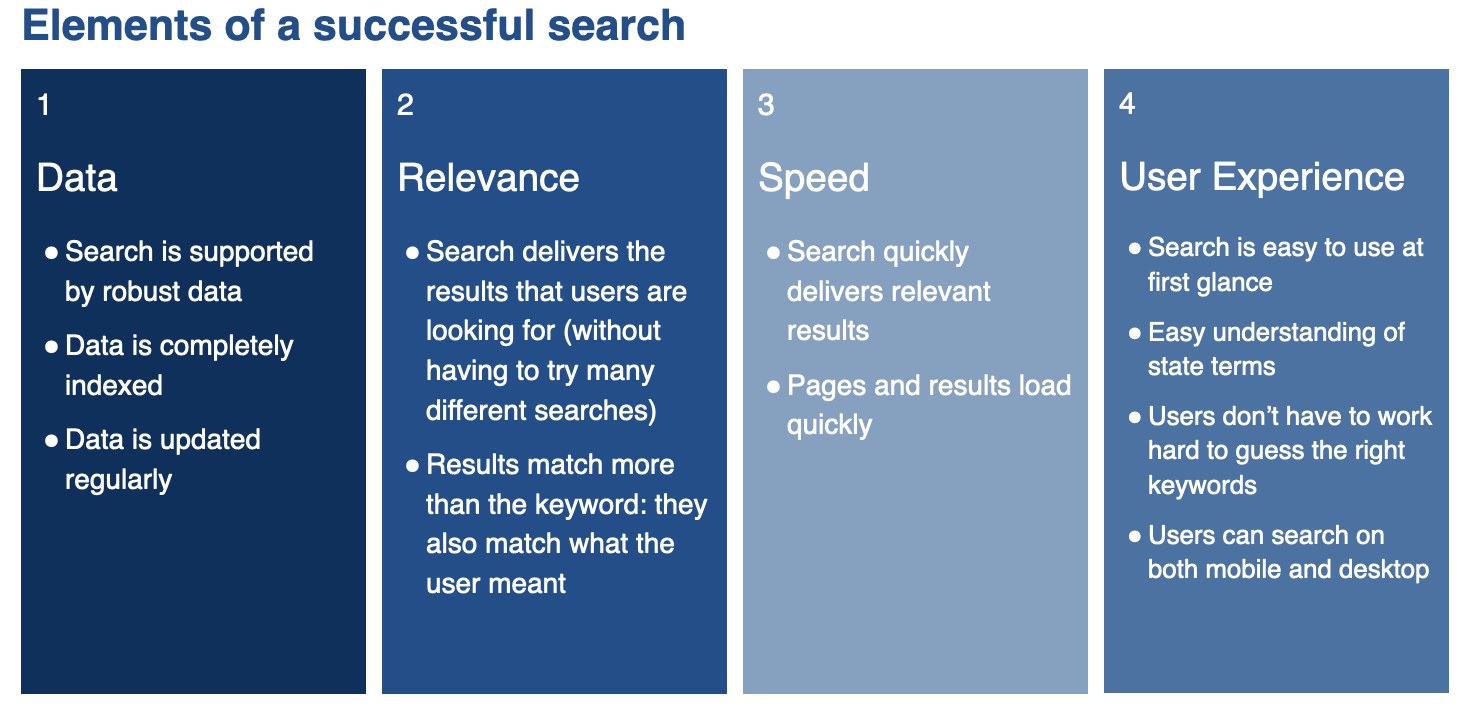
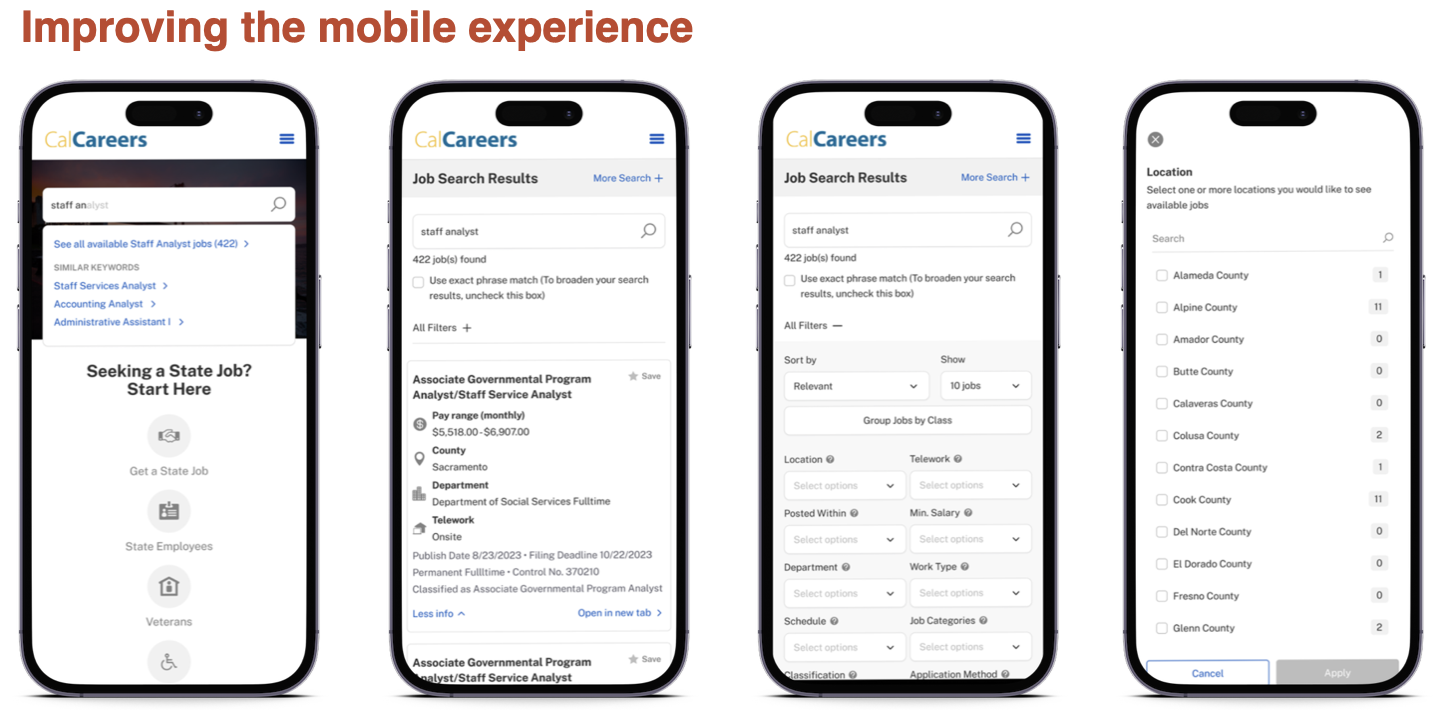
- Search expectations mismatch: Candidates expected modern search behaviors (autocomplete, forgiving typos, relevance ranking) that the system didn't support
- Filter overload: Too many filter options without clear prioritization made navigation overwhelming
- Location confusion: Geographic search didn't align with how candidates think about where they want to work
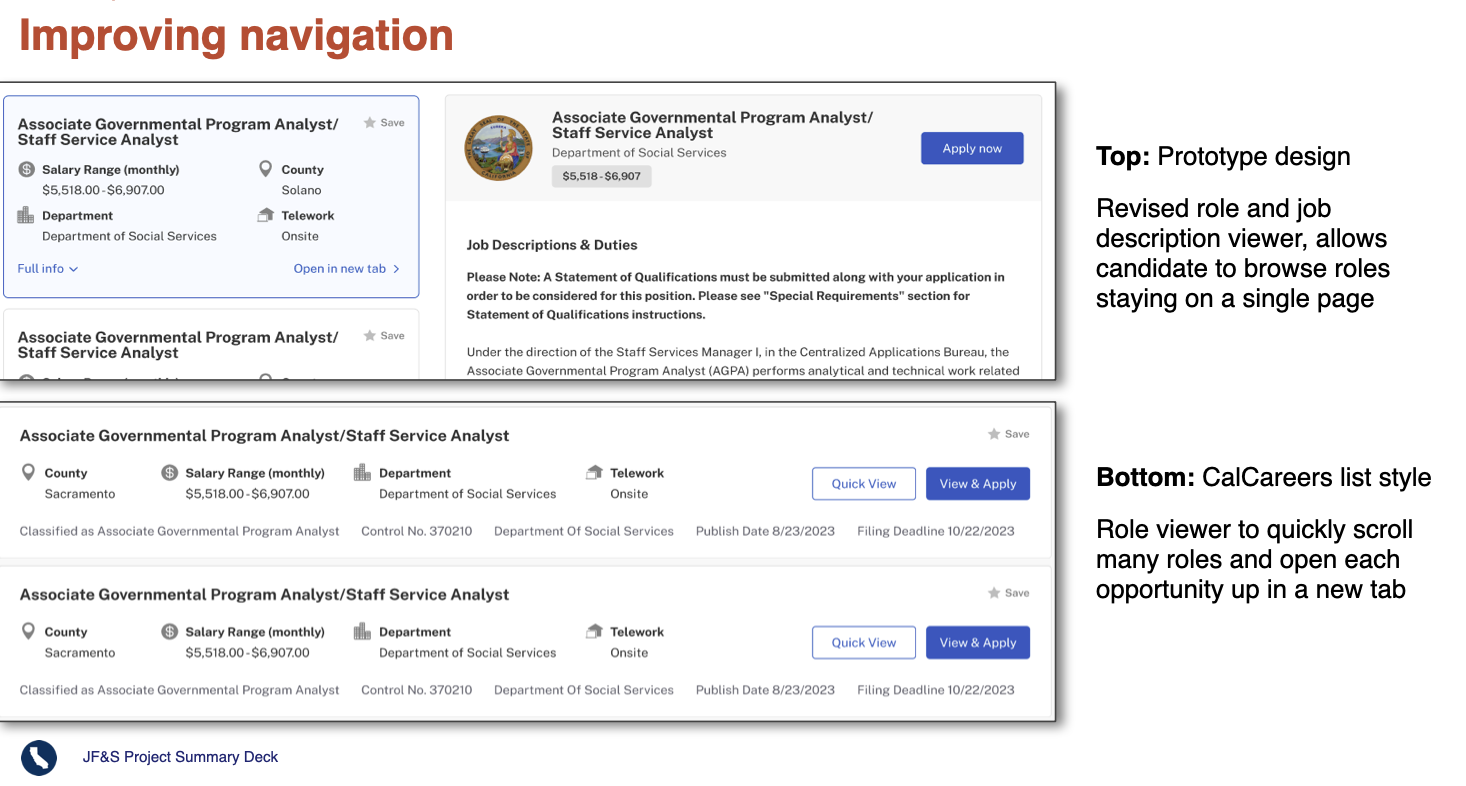
- Results presentation: Job listings lacked sufficient context to help candidates quickly assess fit
How It Was Used
Research findings directly informed design and engineering priorities:
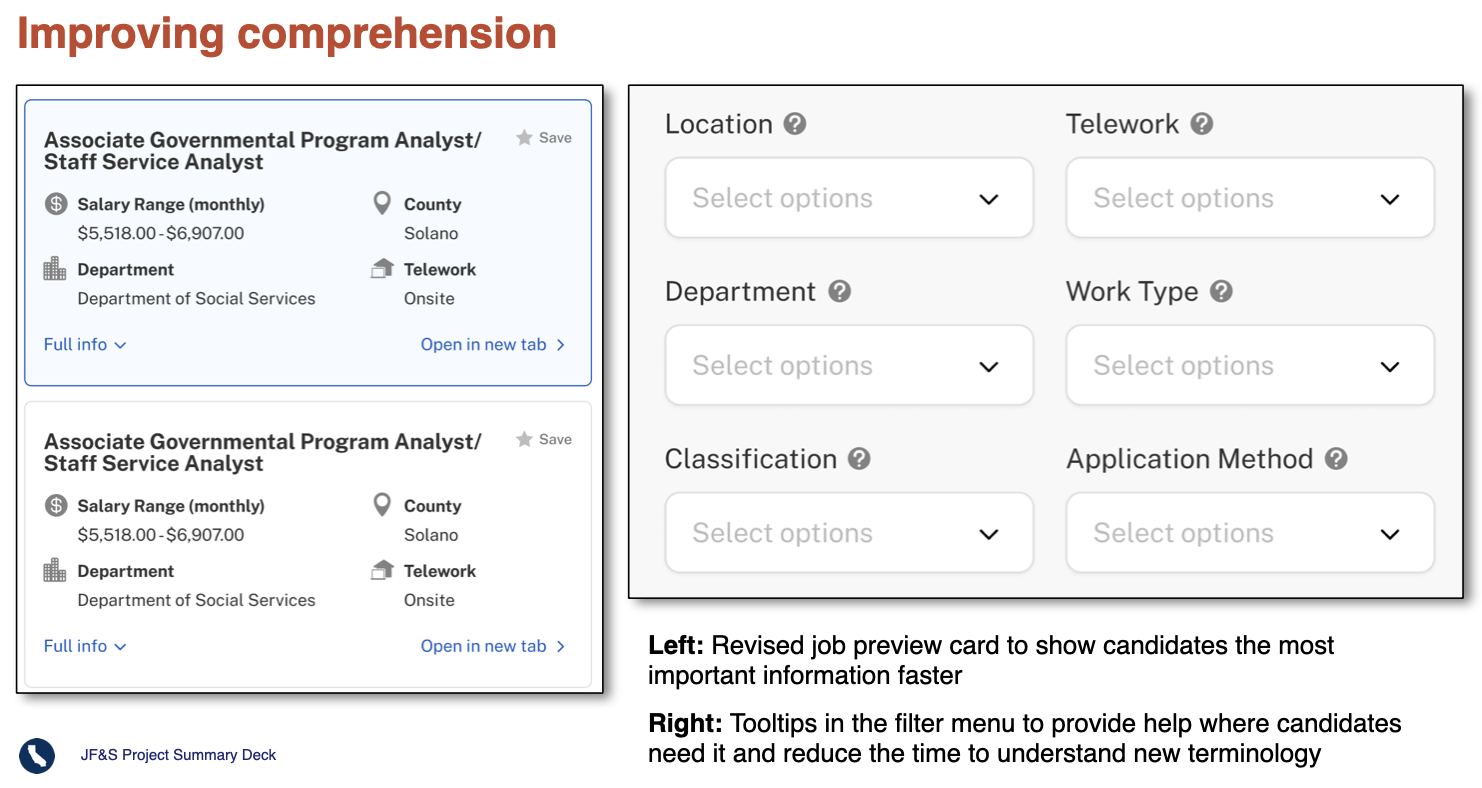
- Simplified filter hierarchy to surface most-used options first
- Improved location search with clearer geographic categories
- Enhanced job listing cards with more contextual information
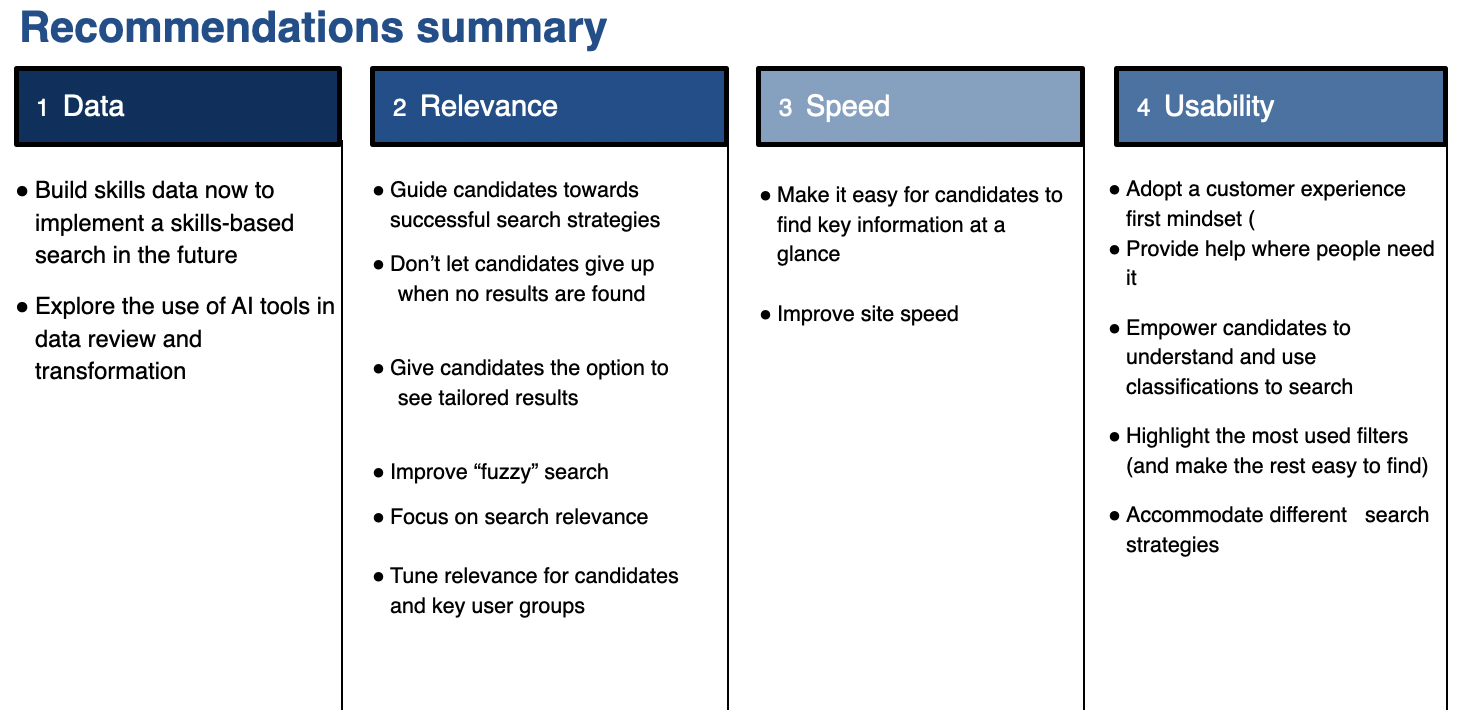
- Provided recommendations for search algorithm improvements
These changes were implemented iteratively, with ongoing validation to ensure improvements actually reduced candidate friction.
Prototype & Design Iterations
What Leadership Learned
- Small UX improvements can have outsized impact on candidate experience without requiring system rebuilds
- Modern search expectations are now baseline — candidates judge government portals by commercial standards
- Filter design matters as much as filter functionality — overwhelming choices reduce engagement
- Iterative improvement with user validation is more effective than attempting comprehensive redesigns