
California Hiring System — Prioritizing What to Fix (Phase 2) 2023–2024
Mixed-methods research & validation
Championing a hiring process that's both merit-based and equitable for all
Decision at Stake
Phase 1 revealed systemic challenges across California's hiring process. Phase 2 asked: Which pain points matter most to candidates — and where should the State prioritize investment?
The question wasn't just what was broken, but what candidates actually needed to complete their journey successfully — and how those needs aligned with the State's capacity to deliver meaningful change.
Context
Building on Phase 1's systemic mapping, Phase 2 shifted focus to the candidate experience — understanding not just what happens, but how it feels and where candidates give up.
The goal was to merge qualitative depth with quantitative validation, ensuring recommendations were grounded in both individual stories and collective data.
My Role
I served as lead UX researcher, conducting interviews, surveys, and analysis while coordinating with CalHR, SPB, and GovOps leadership.
My role included synthesis across multiple data sources and translating findings into actionable, evidence-based recommendations for leadership.
Research Approach (in Service of Decisions)
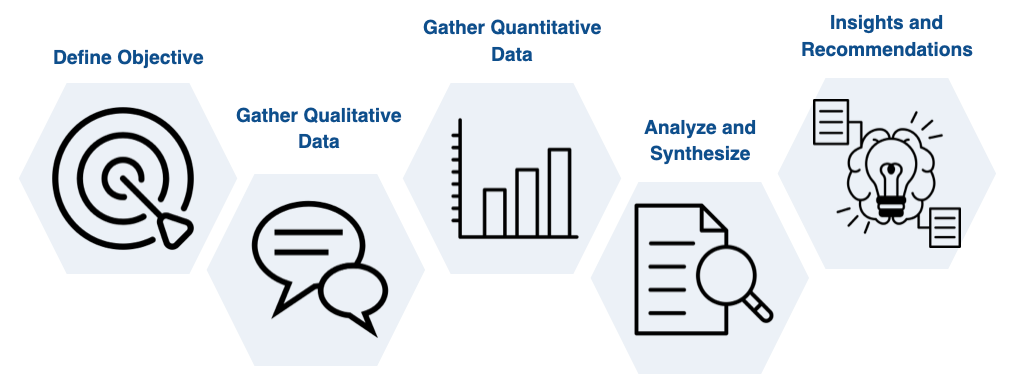
We combined qualitative depth with quantitative validation — using individual stories to understand the "why" behind candidate behavior, then testing whether those insights held at scale.
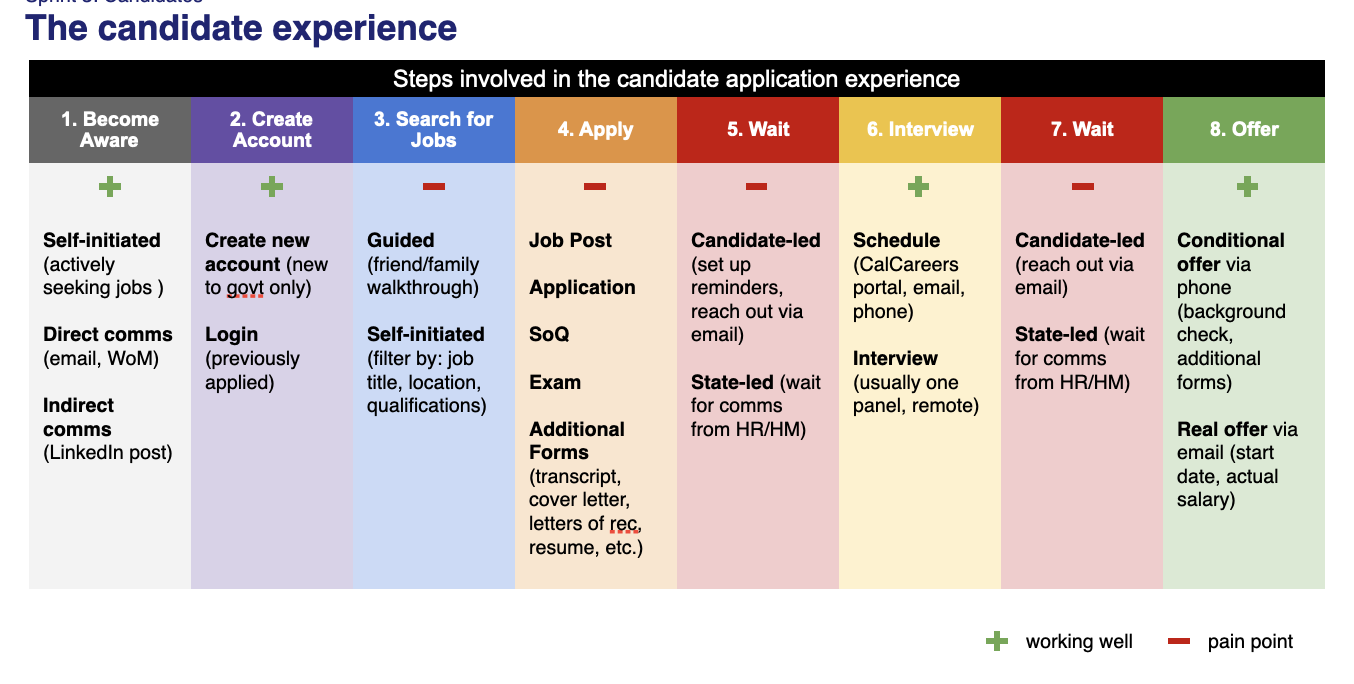
By mapping the end-to-end candidate journey, we identified specific stages where candidates felt lost, frustrated, or disengaged — and where they felt supported.
Methods & Research Rigor
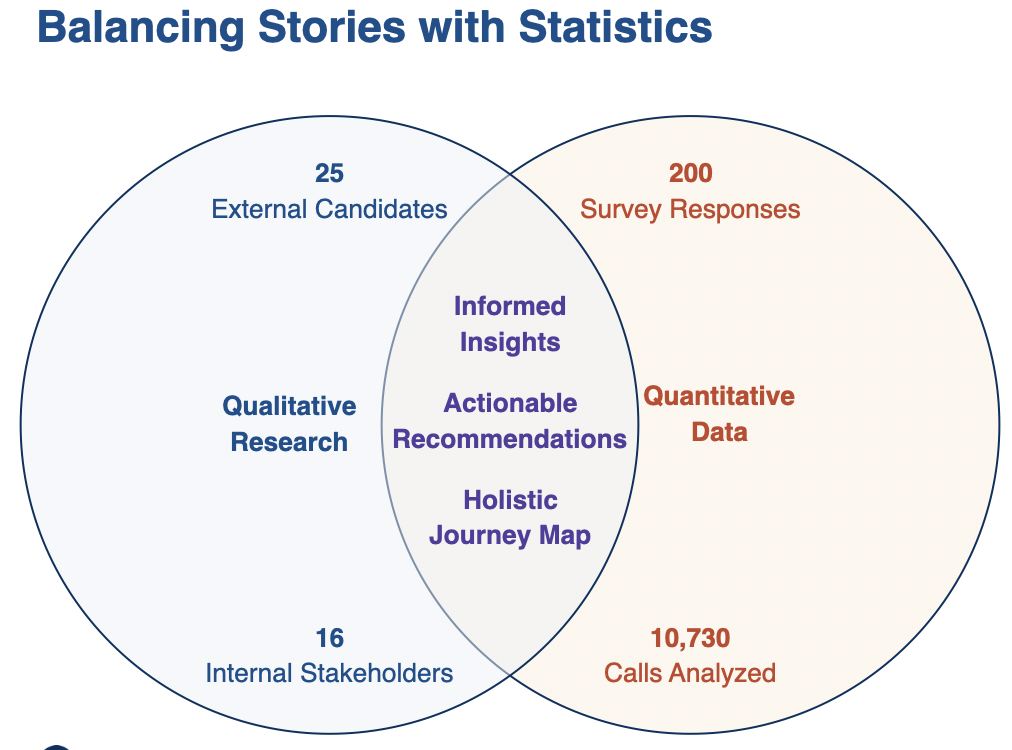
We used a mixed-methods approach to capture both depth and scale:
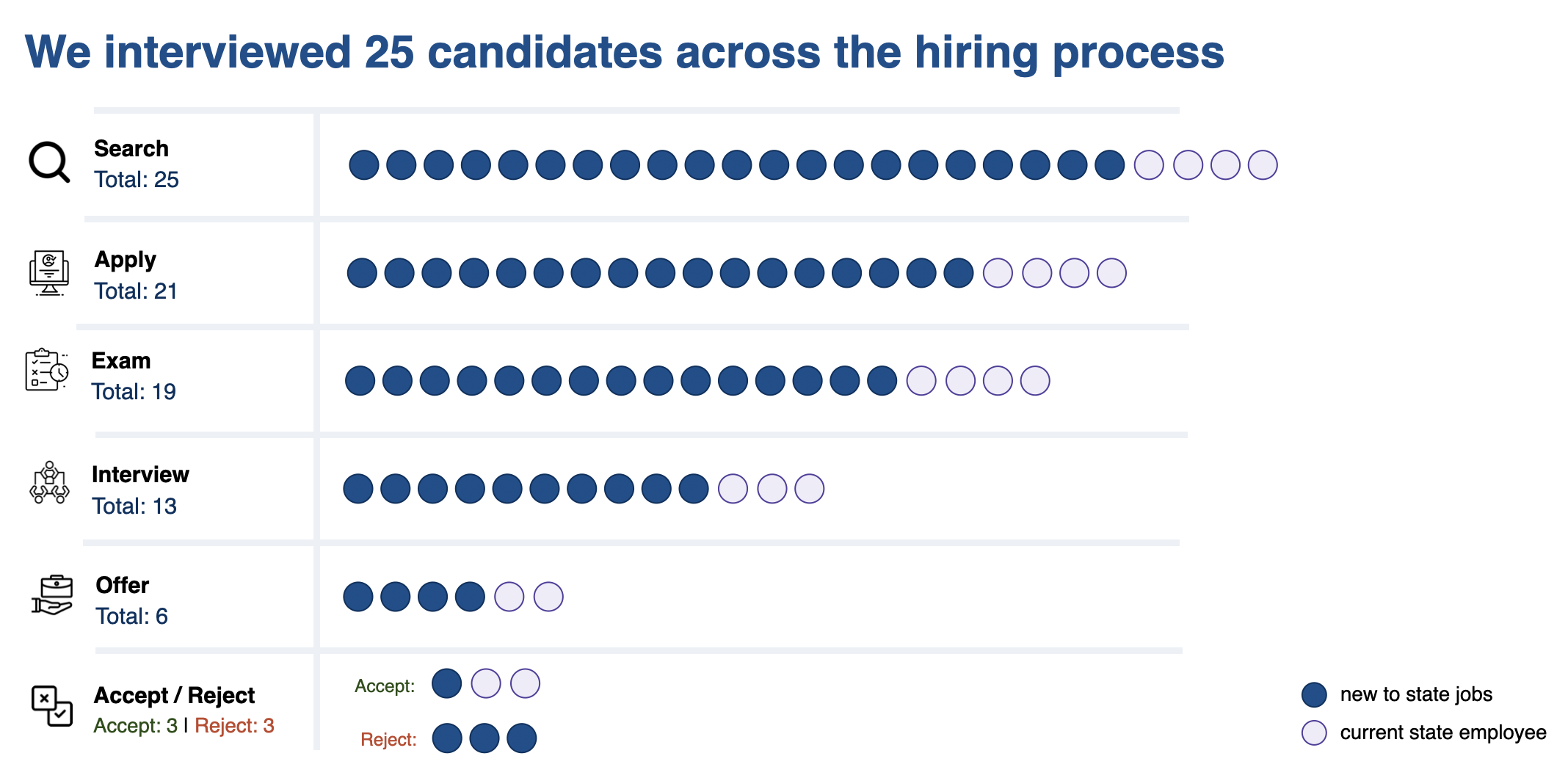
- 25 candidate interviews: Almost all were new to the State as an employer
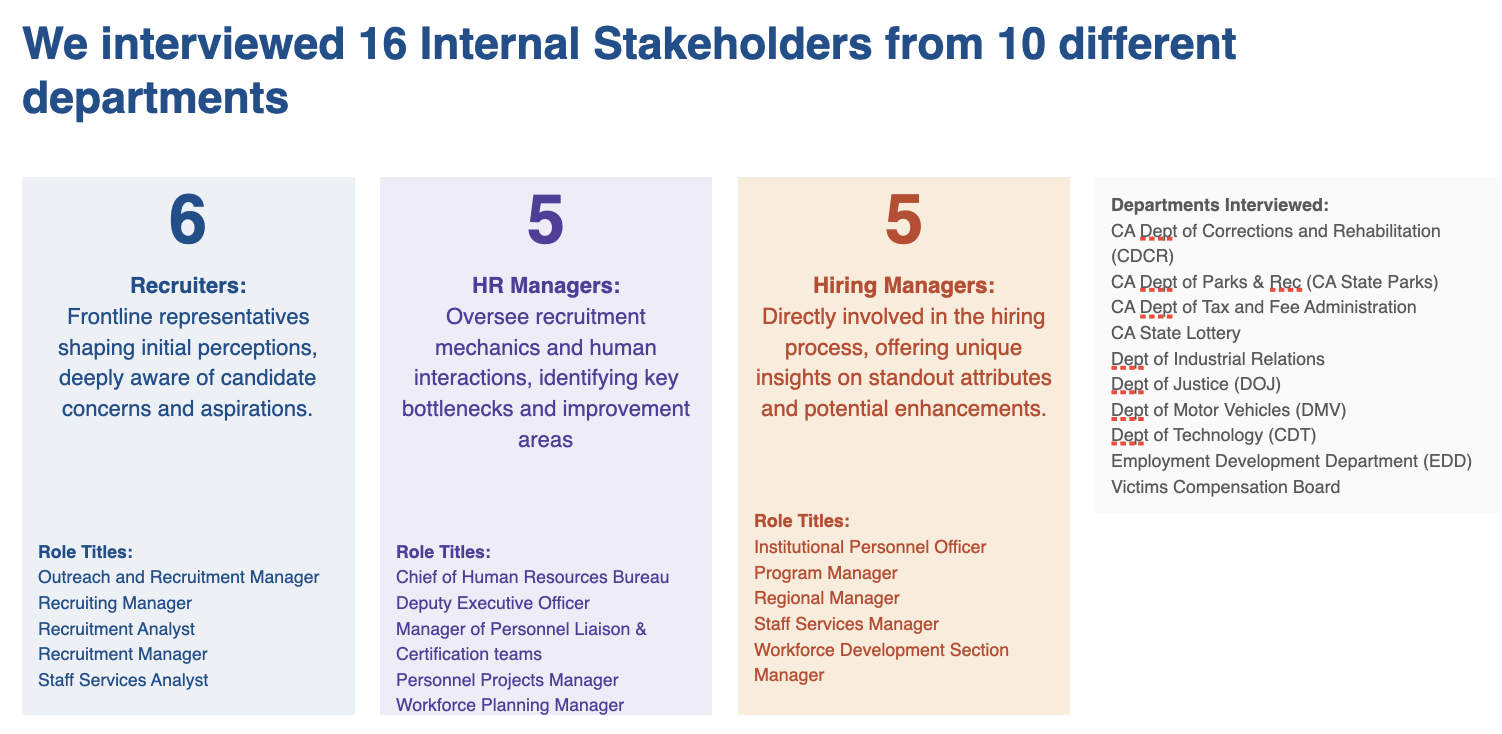
- 16 stakeholder interviews: Recruiters, HR managers, and hiring managers across different departments
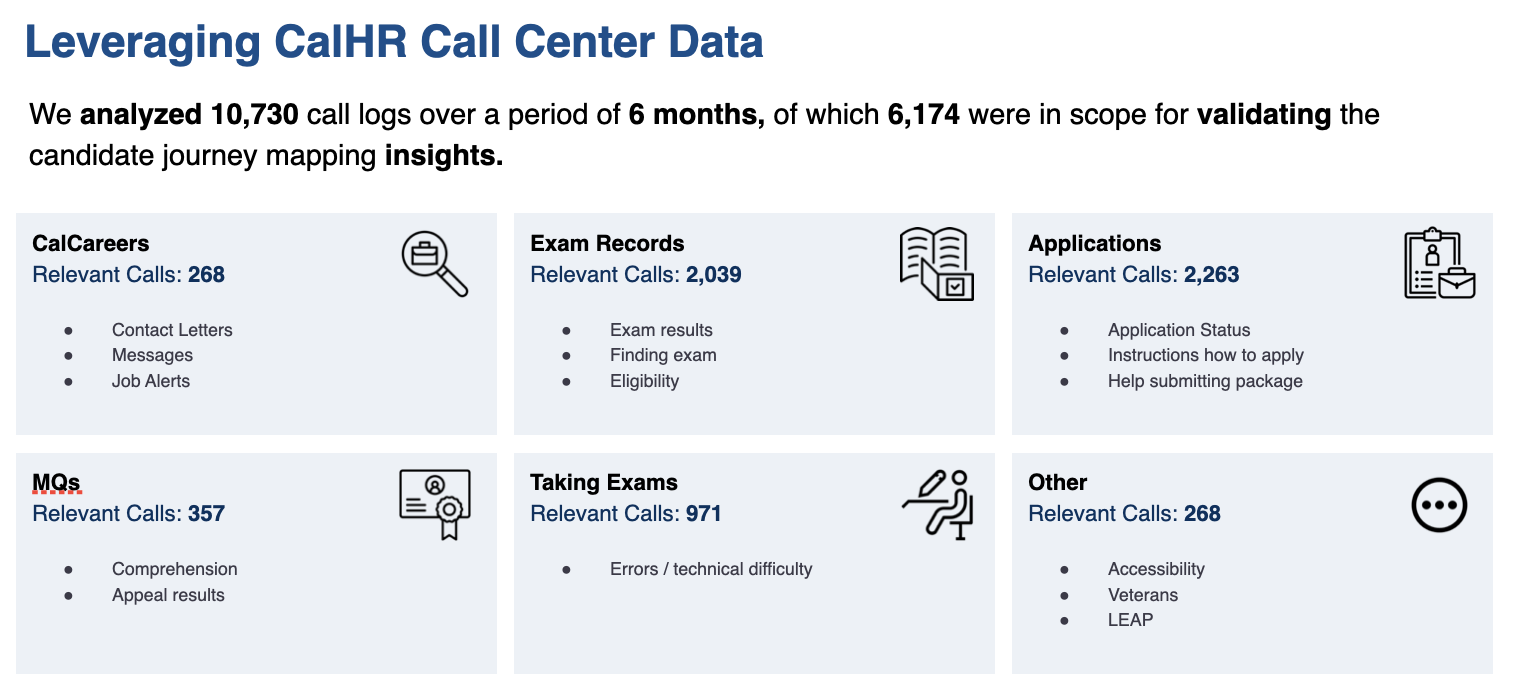
- 10,700+ call center logs analyzed: Quantifying where candidates sought help and why
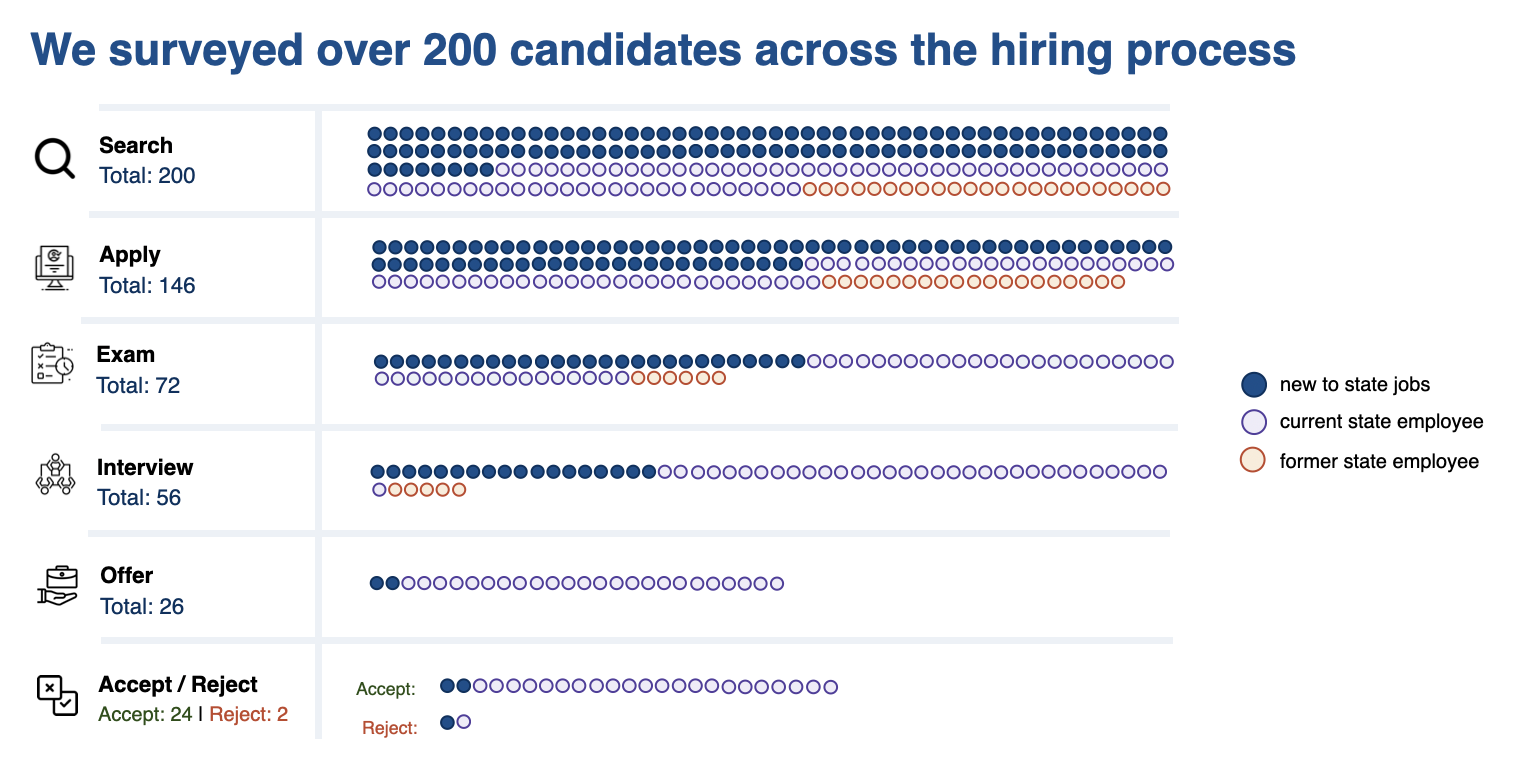
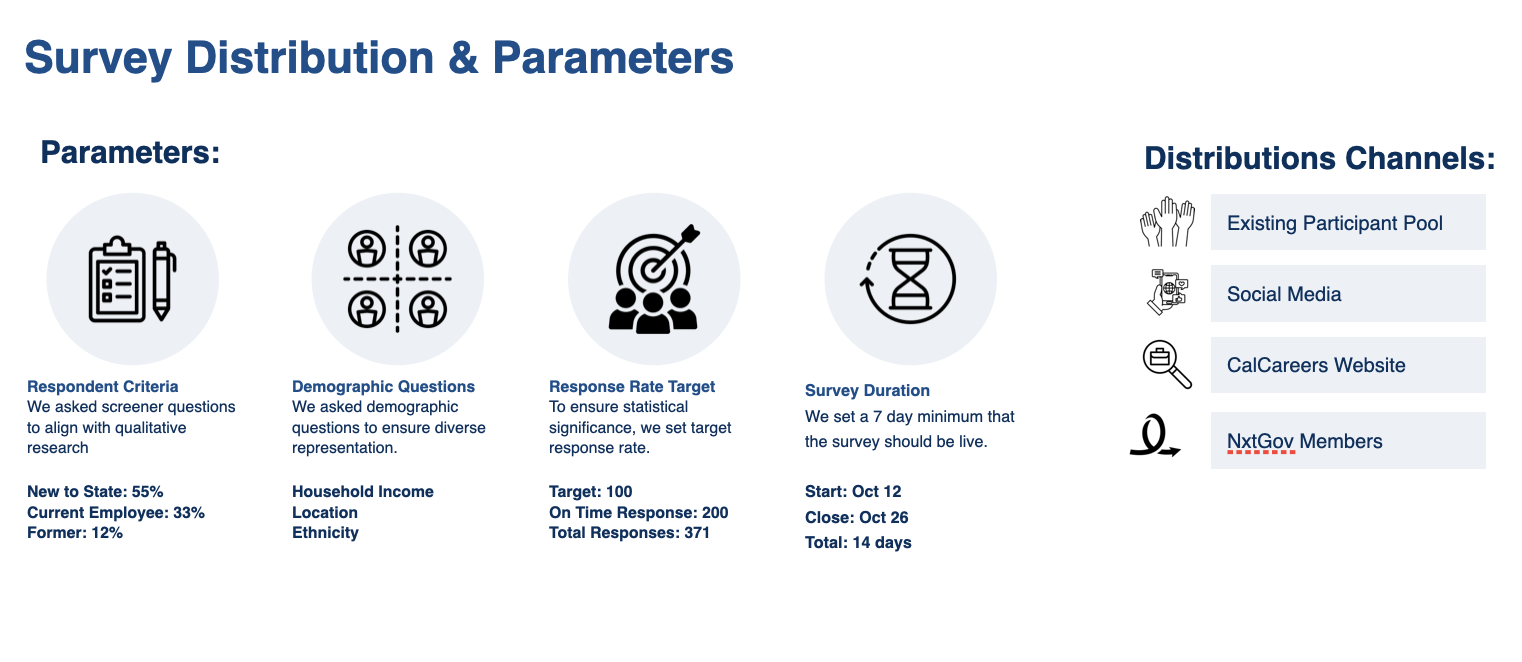
- 200+ survey responses: Validating qualitative findings at scale
Key Insights
- Steep learning curve: Candidates learn how to apply through experience itself. The State can accelerate this with clear expectations from the start.
- Reciprocal effort expected: Candidates are willing to invest time and effort — but expect the State to reciprocate through streamlined processes, context-setting, and relevant notifications.
- Communication matters: Given the upfront effort required and longer timelines, candidates have higher expectations for status updates and feedback to adjust their strategy.
- Information overload: The State's comprehensive documentation approach provides answers — if candidates can find them. Most succeed through their own digging or external guidance.
What Leadership Learned
The candidate experience directly impacts California's ability to hire a diverse and talented workforce.
- Navigating ambiguity: When candidates aren't clear on next steps, they feel anxious and uncertain — deterring potential hires who seek clarity and respect
- Overwhelmed participants: Internal teams (hiring managers, recruiters) also struggle with current process challenges
- Dropout rates: Uncertain, overwhelmed candidates give up — each withdrawal is a missed opportunity for the State
This experience tarnishes California's reputation as a preferred employer. Addressing these challenges is essential for securing a talented and diverse workforce.
How It Was Used
The customer journey map provided a comprehensive view of the candidate experience from initial job search to hiring, capturing highs and lows along the way. This enabled leadership to:
- Identify pain points: Pinpoint specific stages where candidates feel lost, frustrated, or disengaged
- Highlight bright spots: Uncover aspects that leave candidates feeling positive and engaged
- Understand interactions: Map touchpoints with resources and internal actors
- Inform strategy: Align recruitment strategy with candidate expectations